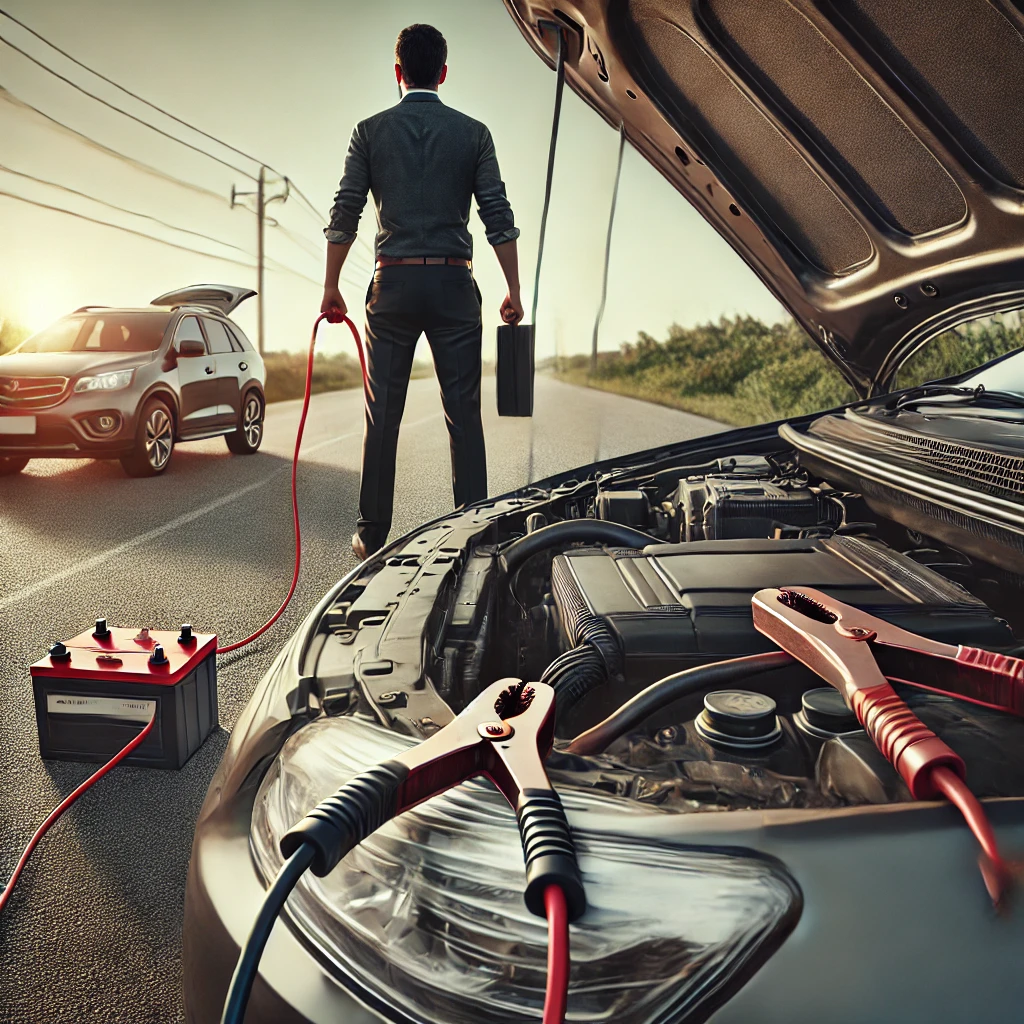
You jump start an automatic in the same way as a manual: same lead order, same safety checks. Put the handbrake on, select the gear position your handbook gives, and follow its jump start section. Automatics can't be push started, so leads, a booster pack or a mobile service are the options.
Differences from a manual
- Gear selector. Use Park (P) with the handbrake on. The RAC's general guidance is handbrake on and car in neutral. On an automatic, check your handbook for which position to use.
- No push starting. Bump starting needs a manual gearbox. See how to push start a car.
- Jump points. Your handbook will show whether your car has separate jump-start points.
Step by step (RAC and AA)
- Check that neither battery is leaking, cracked or badly corroded.
- Switch both cars off, put the handbrakes on and select the position your handbook gives.
- Connect the leads: red to flat +, red to donor +, black to donor −, black to an earth point on the flat car.
- Start the donor car and let it run.
- Start your car, cranking for no more than about 5 seconds at a time.
- Leave both running for a while, then remove the leads in reverse order.
The AA advises against using a hybrid or electric car as the donor.
Afterwards
Drive for around 30 minutes if possible (RAC), then recharge or test the battery. Prefer not to do it yourself? A mobile jump start costs from £70.
Frequently asked questions
Can you push start an automatic car?
No. You need jump leads, a booster pack or professional help.
Should the car be in Park or Neutral?
Follow your handbook. The RAC's general advice is handbrake on and neutral.
Can jump starting damage an automatic gearbox?
Following the correct procedure in your handbook keeps the risk low. If you're unsure, use a professional.